Deutsch
Teil 1: Fragen zum D
00:35
Warum war es für alles Folgende so wichtig, dass vor dem Wohnzimmer ein Garten war?
01:12
Carina sagt, dass das „konkrete Vorstellen“ im Folgenden immer wieder eine Rolle spielt. Warum ist das so wichtig?
01:41
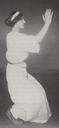
Warum hat Rudolf Steiner Lory an der Hand genommen, um ihr das D zu zeigen?
01:54
Was ist der Unterschied zwischen der Hand beim D der Studentin und beim D von Carina?
Allgemein
Ist das „konkret Vorgestellte“ eher ein visuelles Bild oder ein gefühltes Erlebnis?
02:00
Welchen anderen Laut meint Carina, wenn sie beim D sagt: „Nicht wegnehmen, das geht schon fast in einen anderen Laut hinein“? Was wäre richtiger?
03:00
Beschreibe den Unterschied zwischen der Art, wie die Studentin das D macht, und der Art, wie Carina es zeigt.
04:00
Carina zeigt das D einmal „falsch“ und einmal „richtig“. Was ist der Unterschied? Was „geht mit“?
04:06
Wohin deutet Carina mit ihrer Hand, wenn sie sagt: „Falsch, man ist völlig woanders“ – und was verändert sich, wenn sie sagt: „Richtig, man geht mit“?
04:18
Was meint Carina damit, dass man die Hand nicht einfach „hinbewegen“ soll?
Allgemein
Wie geschieht beim D das Ankommen? Wann und wodurch stoppt die Bewegung?
04:39
Warum soll man das D mit der ganzen Hand machen, während die Finger nur „oben drauf“ kommen?
05:00
Warum spricht Carina jetzt von einer „Reaktion auf eine ruhige Aussenwelt“, während vorher immer vom „konkreten Vorstellen“ die Rede war? Ist das dasselbe?
05:43
Warum heisst es jetzt: „Das Ur-D war direkt“ – und nicht erst Unterarm, dann Hand? Ist das ein Widerspruch zu dem, was bei 04:18 gesagt wurde?
06:08
Was ist der entscheidende Moment, in dem Carina endlich „Ja“ zu den D-Versuchen sagen kann?
07:00
Warum sagte Lory zu Carina: „Nein, so nicht!“?
07:15
Was ist jetzt „vollkommen anders“?
07:45
Carina sagt: „Der ganze Leib geht mit, sonst bist du nicht drin.“ Woran kann man sehen, ob der ganze Leib wirklich mitgeht?
07:50
Was meint Carina mit: „Das ist das Wichtigste: Der Fuss macht es auch!“?
08:10
Warum muss beim D auch der Fuss mitmachen?
09:05
Carina sagt: „Das D war nie ein Hindeuten, sondern immer ein Hingehen.“ Was meint sie damit?
|
|
English
Part 1: Questions on D
00:35
Why was it so important for everything that followed that there was a garden in front of the living room?
01:12
Carina says that “concrete imagination” appears again and again in what follows. Why is this so important?
01:41
Why did Rudolf Steiner take Lory by the hand in order to show her the D?
01:54
What is the difference between the student’s hand in the D and Carina’s hand in the D?
General
Is the “concretely imagined” more of a visual image or a felt experience?
02:00
Which other sound does Carina refer to when she says, regarding the D: “Do not take it away, that almost goes into another sound”? What would be more correct?
03:00
Describe the difference between the way the student makes the D and the way Carina demonstrates it.
04:00
Carina shows the D once “wrongly” and once “rightly”. What is the difference? What “goes along” with it?
04:06
Where does Carina point with her hand when she says: “Wrong, one is completely elsewhere” – and what changes when she says: “Right, one goes along with it”?
04:18
What does Carina mean when she says that one should not simply “move the hand there”?
General
How does the arriving happen in the D? When and through what does the movement come to a stop?
04:39
Why should the D be made with the whole hand, while the fingers only come “on top”?
05:00
Why does Carina now speak of a “reaction to a calm outer world”, whereas before she repeatedly spoke of “concrete imagination”? Is this the same thing?
05:43
Why does she now say: “The original D was direct” – and not first forearm, then hand? Is this a contradiction to what was said at 04:18?
06:08
What is the decisive moment when Carina can finally say “yes” to the attempts at D?
07:00
Why did Lory say to Carina: “No, not like that!”?
07:15
What is now “completely different”?
07:45
Carina says: “The whole body goes along, otherwise you are not inside it.” How can one see whether the whole body is truly going along?
07:50
What does Carina mean by: “This is the most important thing: the foot does it too!”?
08:10
Why must the foot also participate in the D?
09:05
Carina says: “The D was never a pointing towards, but always a going towards.” What does she mean by this?
|